7 Best Facial Machines What Are They Used For?

Time:2026-10-12 Author:Aria
0%

Facial machines have moved from professional treatment rooms into home skincare routines, but their purposes are often misunderstood. If you have ever wondered, “what are facial machines used for,” the answer depends on the device, your skin condition, and the treatment setting. These tools may support cleansing, hydration, exfoliation, muscle stimulation, or the appearance of firmer skin. They do not replace medical care or a consistent skincare routine.

This guide explores seven popular facial machines, including LED therapy devices, microcurrent tools, radiofrequency systems, ultrasonic spatulas, galvanic machines, high-frequency wands, and hydrodermabrasion equipment. Each technology uses a different form of energy or mechanical action. For example, blue LED light is commonly used in acne-focused routines, while red light is often selected for the visible signs of aging. Results can be subtle. Patience matters.

A trained professional considers skin sensitivity, medications, contraindications, and treatment intensity before using advanced equipment. At home, clean the device, follow the manufacturer’s instructions, and avoid using multiple stimulating tools at once. Small mistakes happen. Overuse can cause redness, dryness, or discomfort.

The best machine is not always the most expensive one. It is the device that matches a realistic goal and a safe routine. Some claims sound impressive but lack strong, independent evidence. This overview separates common uses from marketing promises, helping readers make more informed skincare decisions.
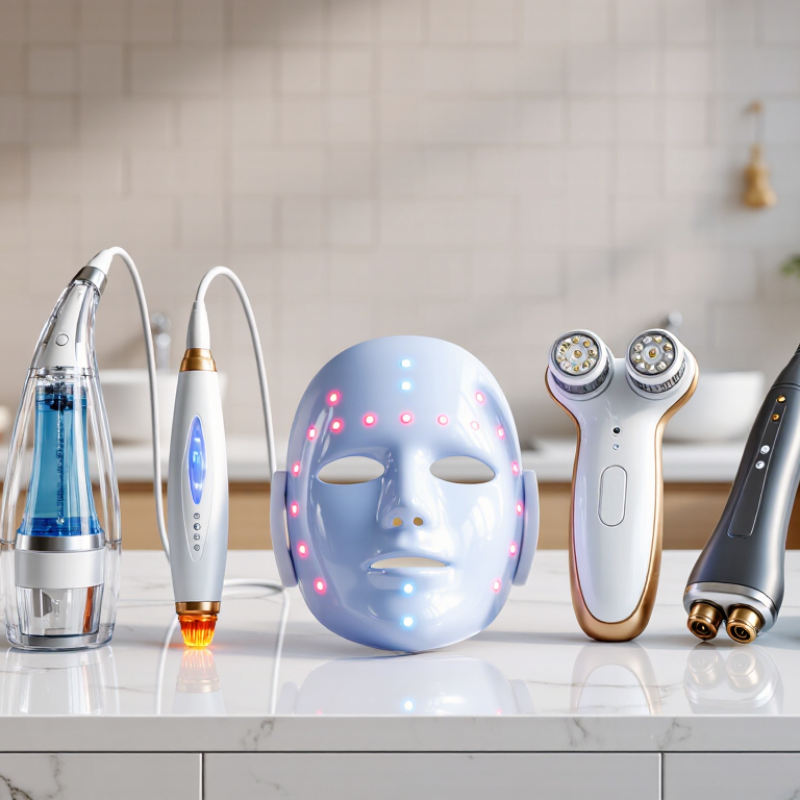
7 Best Facial Machines What Are They Used For?

What Are Facial Machines and How Do They Work?

Facial machines are electronic devices designed to support cleansing, hydration, circulation, or skin appearance. They work through controlled energy, movement, or product delivery rather than simple creams. Common options include cleansing brushes, ultrasonic spatulas, LED therapy, microcurrent, radiofrequency, oxygen infusion, and high-frequency devices. Each method targets a different skin concern.

A cleansing brush uses gentle vibration or rotation to loosen surface oil and sunscreen. Ultrasonic spatulas use high-frequency vibration to help lift debris from damp skin. LED devices expose the skin to specific light wavelengths. Red light may support a calmer-looking complexion, while blue light is often used for blemish-prone skin. Microcurrent delivers very low electrical currents, although visible results can be subtle and temporary.

Radiofrequency warms deeper skin tissue and may encourage a firmer appearance over time. Oxygen infusion pushes a fine mist across the skin, but the added glow may come mainly from hydration. High-frequency devices create a mild electrical current and are sometimes used in professional facial treatments. Results depend on device quality, skin condition, treatment frequency, and correct technique.

Use clean equipment and follow the manufacturer’s safety instructions. More intensity is not always better. Devices may irritate sensitive skin, especially after exfoliation or when used too often. People with implanted electronic devices, certain medical conditions, or active skin problems should seek professional advice first. A useful correction is this: facial machines can support skincare, but they cannot replace diagnosis, sunscreen, or realistic expectations.

The Seven Best Facial Machines for Different Skin Needs

7 Best Facial Machines: What Are They Used For?

The seven best facial machines serve different skin needs, not one universal routine. A cleansing brush helps remove surface oil and sunscreen, but sensitive skin may find it irritating. An ultrasonic spatula gently loosens debris around the nose and chin. It works best with damp skin and light pressure. For dull complexions, LED therapy may support calmer-looking skin and gradual tone improvement. Results vary, and consistent use matters more than dramatic promises.

A microcurrent device provides mild electrical stimulation for a temporarily lifted appearance. It should not replace professional treatment or medical advice. High-frequency machines are commonly used for oily, blemish-prone skin, although they can feel drying. Radiofrequency devices use controlled warmth to support firmer-looking skin, but home models are usually less powerful. Oxygen infusion machines can add temporary freshness, especially before an event. I have noticed that hydration often creates the quickest visible change. That does not mean deeper skin repair has occurred.

Tips: Match the machine to your skin concern, not online popularity. Patch-test new devices on a small area. Keep attachments clean after every use. Avoid combining heat, exfoliation, and strong active products in one session. Stop if you feel burning, swelling, or prolonged redness. People with implanted electrical devices, active skin conditions, or pregnancy concerns should ask a qualified healthcare professional first. Even careful routines can be imperfect. Track comfort and results for several weeks.

What Each Facial Machine Is Used For

7 Best Facial Machines: What Are They Used For?

A facial cleansing brush uses gentle vibration to loosen surface oil, sunscreen, and dead skin. It should glide lightly, not scrub until the skin feels hot. An ultrasonic spatula uses high-frequency vibrations to lift loosened debris from damp skin. It may suit congested areas, but results vary with hydration and technique. High-frequency equipment creates a mild electrical current around the skin. Professionals often use it after extractions to support a cleaner-looking surface. Sensitive skin may react with temporary redness.

LED light machines use selected wavelengths for different cosmetic goals. Red light is commonly used to support a calmer, fresher appearance, while blue light targets blemish-prone skin. Eye protection and correct timing matter. Microcurrent machines deliver very low electrical impulses. They are used to create a temporarily toned and lifted look. Conductive gel is usually necessary. Radiofrequency machines warm deeper skin layers and support a firmer appearance over repeated sessions. Heat should feel comfortable, never sharp or burning.

An oxygen infusion machine sprays a light serum mist across the face. It mainly improves surface hydration and gives a refreshed finish. The effect may be brief, especially in dry weather. In practice, facial machines work best with careful cleansing, suitable products, and realistic expectations. No device is magic. I still question routines that promise dramatic changes overnight. People with implanted electrical devices, active skin conditions, or unusual sensitivity should seek professional advice before treatment. Proper training, sanitation, and manufacturer instructions remain essential.

7 Best Facial Machines: What Are They Used For? — What Each Facial Machine Is Used For

Facial Machine Main Technology Primary Uses How It Works Common Skin Concerns Important Precautions
LED Light Therapy
Light-based treatment
Uses specific wavelengths of visible or near-infrared light, commonly blue, red, or near-infrared.
  • Supports acne-focused skincare routines
  • Helps calm the appearance of temporary redness
  • Supports collagen-related skin care goals
  • Provides a non-invasive treatment with little to no downtime
Light is absorbed by skin cells and may influence cellular activity. Blue light is commonly used in acne-care protocols, while red and near-infrared light are commonly used for soothing and skin-rejuvenation routines. Mild breakouts, temporary redness, dull-looking skin, and fine lines. Use eye protection when required by the device. Photosensitizing medicines and conditions affected by light may require medical advice before treatment. Results vary and usually require repeated sessions.
Microcurrent Facial Device
Low-level electrical current
Delivers very low electrical currents through conductive probes or pads.
  • Temporarily improves the appearance of facial firmness
  • Provides a lifting or toning effect during treatment
  • Supports facial massage and product-application routines
  • May help reduce the appearance of mild puffiness temporarily
A small electrical current passes between the device electrodes through conductive gel or another suitable medium. The sensation is typically mild when used correctly. Loss of visible firmness, facial puffiness, and tired-looking skin. Do not use over implanted electronic devices, such as pacemakers, unless cleared by a qualified medical professional. Avoid broken skin and follow the device’s current-intensity and contraindication guidance.
Ultrasonic Skin Spatula
Ultrasonic vibration
Uses high-frequency mechanical vibrations from a flat metal spatula.
  • Helps loosen surface debris and excess sebum
  • Assists gentle exfoliation of the outermost skin layer
  • Supports cleansing before other facial treatments
  • May help skincare products spread more evenly
The vibrating blade is used on damp skin. Its mechanical action helps lift loosened surface impurities without the abrasive action of crystal or diamond exfoliation. Surface congestion, excess oil, rough texture, and dull-looking skin. Keep the skin moist and use light pressure. Avoid active infections, open wounds, severe irritation, and inflamed acne lesions. Excessive pressure or frequent use may increase irritation.
High-Frequency Facial Machine
Electrical glass-electrode treatment
Uses a glass electrode that produces a mild alternating electrical current, sometimes creating a small amount of ozone around the electrode.
  • Used in professional acne-care protocols
  • Helps dry and soothe selected blemish areas
  • Provides a warming, stimulating facial treatment
  • Can be used after extractions when appropriate
The glass electrode is moved over the skin or briefly applied to a targeted area. The electrical discharge creates warmth and a mild tingling sensation. Oily skin, occasional blemishes, and post-extraction facial care. Avoid use with implanted electronic devices, seizure disorders, metal in the treatment area, active rosacea flares, or open lesions unless professionally cleared. Avoid flammable products and vapors.
Galvanic Facial Machine
Direct-current treatment
Uses a low-level direct current with positive and negative poles.
  • Supports product penetration during iontophoresis
  • Helps soften sebum before cleansing during desincrustation
  • Can be included in deep-cleansing facial protocols
  • Provides a structured treatment for selected skincare products
The current is used with a suitable conductive product. Negative-polarity desincrustation may help soften oily material, while iontophoresis uses current to assist the movement of compatible charged ingredients. Excess sebum, clogged pores, and skin requiring enhanced product application. Avoid use with pacemakers or other implanted electronic devices, metal implants in the treatment area, active skin infections, and damaged skin. Product polarity and treatment timing must match the manufacturer’s instructions.
Diamond Microdermabrasion Machine
Mechanical exfoliation and suction
Uses a diamond-coated tip and controlled vacuum suction to remove superficial dead skin cells.
  • Refines the appearance of rough skin texture
  • Helps brighten dull-looking skin
  • Can soften the appearance of superficial fine lines
  • Supports treatment of some superficial acne-scar texture concerns
The abrasive tip exfoliates the outermost layer of the skin while suction lifts loose cells and debris. Treatment intensity depends on the tip, pressure, and number of passes. Rough texture, mild uneven tone, superficial congestion, and dullness. Avoid active acne inflammation, eczema or dermatitis flares, open wounds, recent chemical peels, and fragile or highly irritated skin. Strong suction may cause bruising or prolonged redness.
Radiofrequency Facial Machine
Thermal energy treatment
Delivers radiofrequency energy to create controlled heating in deeper skin tissues.
  • Used to improve the appearance of mild skin laxity
  • Supports collagen-focused facial protocols
  • May soften the appearance of fine lines over a series of treatments
  • Provides controlled warming without surgical incisions
Radiofrequency energy generates heat in the tissue. The controlled thermal effect may stimulate remodeling processes, but visible results generally develop gradually rather than immediately. Mild laxity, fine lines, and loss of visible firmness. Treatment must be performed with appropriate temperature control and professional training. Avoid areas with active infection, impaired sensation, or certain implanted electronic or metal devices. Follow medical and device-specific safety guidance.

Note: Facial machines are selected according to skin type, treatment goals, device specifications, and professional assessment. They are not a substitute for medical diagnosis or treatment, and the manufacturer’s instructions should always be followed.

How to Choose the Right Facial Machine for Your Skin

Choosing the right facial machine starts with your skin concern, not its popularity. The seven common categories are LED, microcurrent, radiofrequency, ultrasound, microdermabrasion, hydrodermabrasion, and IPL. Each serves a different purpose. LED may support acne management and calming. Microcurrent targets temporary muscle stimulation. Radiofrequency delivers controlled heat for firmer-looking skin. Microdermabrasion removes surface debris, while hydrodermabrasion combines cleansing with hydration. IPL may reduce the appearance of selected pigmentation, redness, or hair, but it requires careful assessment.

Demand is significant. The International Society of Aesthetic Plastic Surgery reported 19.1 million nonsurgical procedures worldwide in 2023. However, popularity does not prove suitability. The American Academy of Dermatology advises professional evaluation before energy-based treatments, especially for darker skin tones, active inflammation, melasma, or suspicious lesions. A device’s wavelength, energy level, treatment depth, and cooling system matter more than attractive claims.

Start with a skin record. Note sensitivity, breakouts, pigmentation, medications, and recent procedures. For mild congestion, gentle hydrodermabrasion may be more appropriate than aggressive resurfacing. For uneven tone, IPL can be unsuitable when melasma is uncontrolled. Ask for clinical evidence, operator training, contraindications, and realistic treatment intervals.

I would not choose a machine from one impressive photograph. That is an easy mistake. Professional data can guide decisions, but individual skin often responds unpredictably. Even a well-designed device may irritate a compromised barrier. A cautious patch test can reveal more than confident advertising.

Safety Rules and Care Tips for Facial Machine Use

7 Best Facial Machines: What Are They Used For?
Safety Rules and Care Tips for Facial Machine Use

Facial machines may use LED light, microcurrent, ultrasonic vibration, radiofrequency, or controlled warmth. Their purposes differ, so treatment settings should never be guessed. The 2024 Global Wellness Economy Monitor valued the personal care and beauty sector at about $1.1 trillion in 2022. Rapid growth does not prove every device works safely. That assumption is risky. Choose equipment with clear instructions, documented testing, and traceable safety information. A trained professional should assess sensitive skin, active inflammation, recent procedures, and implanted electronic devices before treatment.

Start with clean, dry hands and a disinfected treatment head. Follow the stated contact time for the disinfectant. Do not use a device over broken skin, eye infections, suspicious lesions, or severe irritation. Wear suitable eye protection for bright LED treatments. Keep conductive gel away from the eyes and mouth. Stop immediately if there is sharp pain, blistering, unusual swelling, or persistent numbness. A mild warmth can be expected; burning cannot. The American Academy of Dermatology recommends seeking professional guidance for persistent reactions, especially after cosmetic procedures. I would also record the device, setting, duration, and skin response. That small habit exposes mistakes. Careless storage, shared attachments, and skipped cleaning can turn a routine session into a contamination risk. Replace damaged cords, charge units safely, and never improvise with adapters.

7 Best Facial Machines: Uses, Safety Rules & Care Tips

Chart guide: The bars show representative treatment-session lengths commonly used for each facial machine. Actual times vary by device, skin condition, treatment area, and manufacturer instructions.

  • Ultrasonic skin scrubber: Helps loosen surface debris and support gentle exfoliation.
  • Microcurrent: Uses low-level electrical current for temporary facial toning and contouring effects.
  • LED light therapy: Uses specific light wavelengths to support selected skin-care goals.
  • High-frequency: Uses a glass electrode and alternating current for localized skin treatments.
  • Galvanic: Uses direct current with conductive products to support cleansing or product infusion.
  • Microdermabrasion: Mechanically exfoliates the outermost layer of the skin.
  • Radiofrequency: Delivers controlled heat to deeper skin layers for a temporary firming effect.

Safety and care: Read the device instructions before use, disinfect contact surfaces, avoid broken or irritated skin, use suitable conductive gel when required, protect the eyes from intense light, remove metal jewelry for electrical treatments, and stop immediately if burning, pain, swelling, or unusual redness occurs. People with implanted electronic devices, certain medical conditions, active skin infections, or pregnancy-related concerns should seek professional medical advice before using electrical or energy-based facial machines.

FAQS

What facial machine helps remove surface oil and sunscreen?

A cleansing brush uses gentle vibration to loosen oil, sunscreen, and dead skin. Glide it lightly over the cheeks and forehead. Do not scrub until the skin feels hot. Sensitive skin may find it irritating.

How does an ultrasonic spatula work?

An ultrasonic spatula uses high-frequency vibration to loosen debris around the nose and chin. Use it on damp skin with light pressure. Results depend on hydration and technique. More pressure is not better.

Which machine suits a dull-looking complexion?

An LED light machine may support a calmer, fresher appearance and gradual tone improvement. Red light is commonly used for these cosmetic goals. Follow the timing instructions and protect your eyes. Results vary.

What is a microcurrent device used for?

A microcurrent device delivers very low electrical impulses. It may create a temporarily lifted and toned appearance. Conductive gel is usually needed. The effect is not permanent.

Can high-frequency machines help blemish-prone skin?

High-frequency equipment is commonly used for oily or blemish-prone skin. It may support a cleaner-looking surface after extractions. Temporary redness or dryness can occur. Stop if discomfort continues.

What does a radiofrequency facial machine do?

Radiofrequency devices use controlled warmth to support firmer-looking skin over repeated sessions. Home devices are usually less powerful than professional equipment. Heat should feel comfortable. Burning is a warning sign.

What results can an oxygen infusion machine provide?

An oxygen infusion machine sprays a light serum mist across the face. It mainly improves surface hydration and creates a refreshed finish. The effect may fade quickly in dry weather. Hydration often looks impressive, but deeper repair has not necessarily happened.

How can facial machines be used more safely?

Clean your hands and disinfect the treatment head before every session. Do not use devices on broken skin, eye infections, or severe irritation. Avoid combining heat, exfoliation, and strong active products. Stop after sharp pain, blistering, swelling, or persistent numbness. People with implanted electronic devices, active skin conditions, or pregnancy concerns should seek professional advice. Keep it simple. I still think some routines promise too much.

Conclusion

Facial machines are home or professional tools that use technologies such as gentle cleansing, massage, heat, light, microcurrent, or controlled exfoliation to support different skincare goals. If you are wondering, “what are facial machines used for,” they may help remove surface impurities, improve product absorption, refresh tired-looking skin, reduce the appearance of puffiness, smooth uneven texture, or support a firmer-looking complexion. The seven main types can include cleansing devices, facial steamers, LED light tools, microcurrent devices, ultrasonic spatulas, oxygen infusion tools, and high-frequency machines, with each designed for specific skin needs.

Choosing the right device depends on your skin type, concerns, sensitivity, and skincare routine. Always read the instructions, begin with the lowest comfortable setting, and avoid using a device on broken, irritated, or infected skin. Keep the tool clean, do not overuse it, and stop immediately if you experience pain, burning, or unusual redness. Those with medical conditions or sensitive skin should seek professional advice before use.

Aria

Aria

Aria is a dedicated marketing professional with a deep passion for innovative strategies and a keen understanding of our company's product offerings. With a wealth of experience in the industry, Aria excels at crafting engaging content that highlights the unique features and benefits of our......