What Are the Benefits of China Private Label Beauty Devices?

Time:2026-09-22 Author:Sophia
0%

China’s beauty-device market is moving from salon counters into ordinary homes. LED masks, cleansing brushes, microcurrent tools, and heated eye massagers now appear beside skincare bottles. McKinsey’s Beauty Market in 2023 report projected the global beauty industry could reach about $580 billion by 2027, with online channels continuing to expand. This shift creates room for China-based private label development, especially when brands need flexible design, controlled pricing, and faster product testing.

So, what are the benefits of private label beauty devices? The answer begins with manufacturing depth. China has dense supplier networks for batteries, silicone components, LEDs, motors, packaging, and electronic assembly. A brand can often customize the handle texture, charging method, color palette, user interface, and carton design within one coordinated supply chain. That detail matters. A matte rose-gold device feels different from a generic white unit on a retail shelf.

Grand View Research has identified home-use beauty devices as a growing market segment, supported by consumer interest in convenient, technology-assisted routines. Private labeling can help brands respond to that demand without building a factory. It may also support smaller pilot orders, localized features, and quicker feedback from customers.

However, low prices are not the whole story. They can hide weak testing, inconsistent batteries, or unclear performance claims. The China National Medical Products Administration also distinguishes regulated medical devices from ordinary beauty products, making classification and documentation essential. Reliable brands should verify electrical safety, material quality, labeling, and supplier records before launch. Not every factory is equally capable. That is the uncomfortable part. A thoughtful private label strategy combines attractive design with evidence, traceability, and realistic claims.
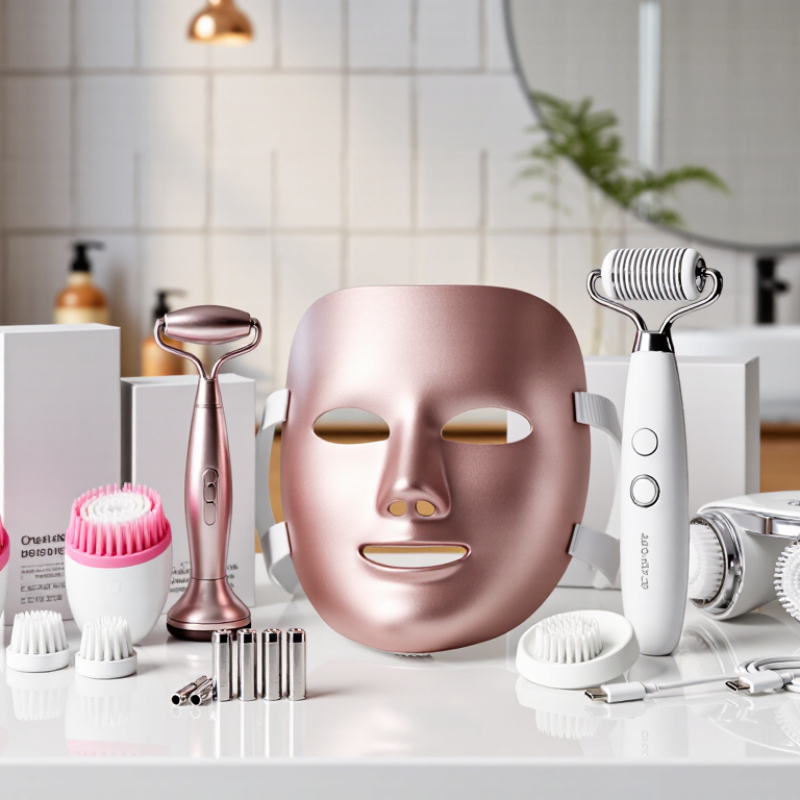
What Are the Benefits of China Private Label Beauty Devices?

What Are China Private Label Beauty Devices?

China private label beauty devices are tools made by a Chinese manufacturer and sold under another company’s label. Common examples include LED masks, facial cleansing brushes, microcurrent tools, and heated eye massagers. The manufacturer usually provides the core design, electronics, packaging options, and user manuals.

This model can reduce development costs and shorten the path from concept to market. Buyers may adjust colors, materials, programs, packaging, and accessories for a specific customer group. Production can also scale when demand grows. However, private label does not mean ready to sell without checks. A polished sample may hide weak battery testing or unclear instructions. That deserves attention.

Tips: Request product samples, test charging safety, inspect skin-contact materials, and review quality records. Ask for documents relevant to your target market, including electrical safety reports and usage guidance. Confirm whether performance claims have reliable evidence. A qualified compliance professional should review requirements before sales begin. Small details matter, such as readable warning labels and stable temperature control. Costs may look attractive, but shipping, testing, revisions, and support can change the final budget. Get everything in writing.

How Private Label Manufacturing Works in China

China private label beauty devices can help companies create customized products without building a factory. The process usually begins with a detailed product brief. It covers functions, materials, appearance, packaging, and target users. A capable manufacturer then reviews feasibility and recommends suitable components. In practice, clear communication matters more than attractive promises. The first sample is rarely perfect. Button placement, charging speed, or treatment intensity may need several adjustments.

Private label manufacturing usually follows a staged workflow. After reviewing the brief, the factory develops drawings or modifies an existing design. Customers receive samples for testing and feedback. Once the design is approved, the manufacturer prepares tooling, confirms packaging artwork, and arranges pilot production. Quality teams should inspect battery safety, electrical performance, waterproof claims, and surface finishing. Independent testing may also be appropriate, depending on the destination market. Compliance documents must match the actual device, not just the sales description. A low quotation can hide weak testing or limited after-sales support.

Tips: Request a written specification sheet before sampling. Check whether replacement parts remain available. Ask for production photos and inspection records. Keep one approved sample as the quality reference. Do not rely only on factory videos. A small pilot order can reveal packaging damage, inconsistent assembly, or unclear instructions before larger production begins. Mistakes are possible, even with experienced suppliers. Allow time for correction.

What Are the Benefits of China Private Label Beauty Devices? - How Private Label Manufacturing Works in China
Dimension How Private Label Manufacturing Works in China Typical Data or Planning Range Potential Benefit for Buyers Important Consideration
Product Development Model Buyers can select an existing device platform, request design changes, or develop a more customized product with a manufacturer. Three common levels: standard private label, modified OEM, and customized ODM development. Allows a business to choose between faster launch times and stronger product differentiation. Greater customization normally requires more engineering work, testing, tooling, and development time.
Product Categories Manufacturers may produce consumer beauty devices such as LED light devices, microcurrent devices, facial cleansing devices, massage tools, and hair-removal devices. Common technologies: LED light, vibration, microcurrent, radio frequency, ultrasonic waves, and intense pulsed light. Buyers can build a product range around skincare, cleansing, massage, hair care, or home beauty routines. Each technology has different safety, performance, labeling, and market-entry requirements.
Customization Options Customization may include housing color, surface finish, logo placement, packaging, user interface, charging method, accessories, and product software. Low to high customization: packaging-only changes through to new tooling and electronic redesign. Supports visual differentiation and a consistent product identity without establishing a factory. Custom molds, firmware, batteries, and electronic components can increase minimum order quantities and lead times.
Minimum Order Quantity Manufacturers usually set different order quantities for stock products, customized packaging, and fully customized products. Indicative planning range: approximately 100–1,000 units for many stock or lightly customized products; higher quantities may apply to custom tooling. Enables small and medium-sized businesses to test demand before committing to a large production run. MOQ is not fixed. It depends on components, packaging, customization level, production capacity, and supplier policy.
Prototype and Sampling The buyer reviews product samples, confirms cosmetic details, tests functions, and approves a pre-production sample before mass manufacturing. Typical sequence: initial sample → revision sample → pre-production approval sample. Reduces the risk of discovering design, packaging, or usability problems after mass production begins. All approved specifications should be documented in a product specification sheet and sample approval record.
Development Timeline Ready-made products generally move through customization, artwork approval, sampling, inspection, and production. New designs require additional engineering and testing. Indicative range: about 4–12 weeks for a ready platform; approximately 3–9 months for a substantially new product. Private labeling can shorten the route to market compared with building a product and factory capability from the beginning. Timelines vary with tooling, component availability, regulatory testing, sample revisions, and order volume.
Cost Structure The buyer pays for product units and may also incur costs for samples, tooling, packaging, testing, certification, freight, and quality inspections. Main cost groups: unit cost, one-time engineering or tooling cost, compliance cost, packaging cost, and logistics cost. Using an existing platform can reduce upfront development investment compared with creating a completely new device. A low unit price does not necessarily mean a low total landed cost; shipping, duties, testing, and rework must also be included.
Production Efficiency Factories can combine established assembly processes, supplier networks, component sourcing, and production equipment for repeat orders. Best suited to: repeatable products with stable specifications and forecastable demand. May improve production consistency and help buyers scale after a successful market test. Capacity, process control, worker training, and component quality should be verified rather than assumed.
Quality Control Quality control can include incoming component checks, in-process inspection, functional testing, appearance inspection, and pre-shipment sampling. Recommended checkpoints: incoming materials, assembly line, finished goods, and pre-shipment inspection. Creates measurable checkpoints for safety, functionality, appearance, packaging, and order accuracy. Inspection criteria should define measurable limits for charging, output, buttons, dimensions, cosmetic defects, and accessories.
Regulatory Planning The buyer and manufacturer identify the destination-market rules based on the device's technology, intended use, electrical system, wireless functions, and claims. Possible compliance areas: electrical safety, electromagnetic compatibility, battery transport, chemical restrictions, labeling, and product claims. Early compliance planning can reduce delays and prevent packaging or marketing claims from requiring costly changes. Requirements differ by country and product type. A beauty device should not be treated as automatically compliant in every market.
Packaging and Localization Manufacturers can print buyer-supplied artwork and prepare localized manuals, labels, inserts, cartons, and accessories. Localization may include: language, voltage information, warnings, usage instructions, symbols, and importer details. Improves customer understanding and supports retail, e-commerce, and distributor requirements in different markets. Artwork must be checked against the final product, regulatory information, translation quality, and barcode requirements.
Supply Chain Flexibility Buyers may use a manufacturer for assembly while coordinating packaging, components, inspection, and shipping through an agreed supply plan. Planning tools: purchase orders, production schedules, approved component lists, and reorder forecasts. Can support gradual expansion from trial orders to regular replenishment. Component shortages, battery availability, seasonal demand, and international freight conditions can affect delivery schedules.
Brand Ownership The buyer supplies or approves the brand identity, packaging artwork, product positioning, and customer-facing materials. Key documents: trademark ownership records, artwork files, product specifications, and written customization agreements. Creates a branded product line without requiring ownership of manufacturing equipment. Ownership of molds, firmware, industrial design, tooling, and customized files should be clearly stated in the contract.
After-Sales Support Support arrangements may cover spare parts, replacement units, troubleshooting documents, warranty handling, and technical communication. Useful support materials: user manual, fault guide, spare-parts list, warranty process, and batch records. Improves service consistency and helps reduce returns caused by incorrect use or unclear instructions. Warranty responsibilities, response times, replacement rules, and technical support channels should be agreed before production.
Overall Buyer Benefit Private label manufacturing combines an existing manufacturing platform with buyer-controlled branding, packaging, specifications, and market positioning. Core value: lower development burden, flexible customization, scalable production, and faster market testing. Provides a practical route for launching differentiated beauty devices without building a complete manufacturing operation. Success depends on supplier verification, clear specifications, quality control, compliance planning, and realistic demand forecasting.
Note: The numerical ranges are indicative planning references rather than universal industry standards. Actual MOQ, cost, timeline, testing, and compliance requirements depend on the product design, destination market, order volume, and manufacturing agreement.

Key Benefits for Beauty Brands and Retailers

For beauty brands and retailers, Chinese private label devices can shorten the path from concept to shelf. Experienced manufacturers often offer existing platforms, adjustable settings, and customizable colors or packaging. This reduces development work and can support more competitive retail pricing. It also helps retailers build a consistent product range, from a compact facial tool to a gift-ready set. The practical advantage is flexibility. Orders can be tested in smaller batches before wider distribution, depending on supplier capacity. This lowers inventory pressure, though it does not remove it.

Reliable sourcing requires more than attractive samples. Buyers should review material specifications, electrical safety documentation, user instructions, and market-specific compliance records. A professional supplier should explain production controls and quality inspections clearly. Sample testing can reveal uncomfortable handles, weak charging ports, or confusing controls before customers find them. Those details affect reviews and repeat sales. Custom features may look impressive, but they can increase costs, lead times, and service difficulties. Not every upgrade earns its place. A simpler device may perform better commercially.

Tips: Request several samples and test them in realistic retail conditions. Compare battery life, surface finish, packaging strength, and cleaning requirements. Confirm minimum order quantities, replacement support, inspection procedures, and documentation before payment. Keep claims modest and evidence-based. Avoid promising clinical results without suitable proof. A small pilot launch is often wiser than a large first order. Mistakes still happen. Good planning makes them cheaper and easier to correct.

Product Customization, Branding, and Market Differentiation

China private label beauty devices can turn a functional product into a recognizable market proposition. Grand View Research estimated the global beauty devices market at approximately USD 32 billion in 2023, with strong growth expected through 2030. This expansion creates room for customized LED masks, cleansing tools, and microcurrent devices. Chinese manufacturers often support adjustable housing colors, control panels, packaging, user interfaces, and accessory sets. These details matter. A matte white device feels clinical, while a soft-touch finish can suggest daily comfort. However, customization is not automatically differentiation.

Branding becomes stronger when product design reflects a specific user routine. A manufacturer can help refine prototypes, reduce unnecessary components, and coordinate packaging with device functions. McKinsey reported that the global beauty market could reach about USD 590 billion by 2028, while online channels continue gaining share. This makes clear photography, simple instructions, and consistent visual language commercially important. Buyers may notice the unboxing before testing the device. That moment is brief.

Market differentiation also depends on evidence. Suppliers should provide test records, material information, production controls, and traceable quality checks. Independent verification remains valuable, especially for electrical safety and performance claims. One weakness deserves attention: faster sampling can encourage rushed decisions. A prototype may look excellent but feel awkward after ten minutes of use. Practical testing, feedback from real users, and revision cycles are still necessary. Private labeling works best when customization solves a visible problem, not when it merely adds another color.

Quality, Cost, Compliance, and Supply Chain Considerations

Private label beauty devices from China can offer strong quality, competitive costs, and flexible production. Quality begins with controlled components, stable assembly, and repeatable testing. In hands-on sourcing work, I would inspect factory records, not only attractive samples. Ask for material specifications, calibration procedures, and batch inspection reports. Independent testing can verify electrical safety, skin-contact materials, and product performance. A polished sample proves little. That is worth remembering.

Lower unit costs can improve margins, but the cheapest quotation may hide expensive risks. Calculate tooling, packaging, shipping, inspections, replacement parts, and possible rework. Compliance should shape the design from the beginning. Requirements vary by market and product category. Request technical files, risk assessments, user instructions, labeling details, and traceable production records. Missing documents can delay launch. I have learned that confident promises are not the same as reliable evidence. A careful supplier welcomes specific questions.

A dependable supply chain needs more than factory capacity. Confirm lead times, minimum order quantities, material availability, and backup sources for critical components. Set approval stages for prototypes, pilot batches, and final production. Keep change control in writing. Even a small housing change can affect testing, packaging, or user instructions. Spare parts and repair guidance also matter after delivery. Communication deserves measurement, not assumptions. Track response times, defect rates, and corrective actions. No supplier is flawless. A shared production spreadsheet can reveal problems before cartons leave the warehouse.

FAQS

What are private label beauty devices?

They are beauty tools made by one manufacturer and sold under another company’s label. Examples include LED masks, cleansing brushes, microcurrent tools, and heated eye massagers. The manufacturer may provide electronics, packaging, accessories, and manuals.

How does the private label process usually work?

It begins with a written product brief. The brief covers functions, materials, appearance, packaging, and target users. The manufacturer then develops drawings or modifies an existing design. Samples require testing, feedback, and sometimes several revisions.

Can buyers customize these devices?

Yes. Buyers may adjust colors, materials, settings, packaging, and accessories. However, every added feature can increase costs and delivery time. A simple device may work better commercially.

What should buyers check before placing a large order?

Request samples and test charging, battery life, controls, and surface finishing. Inspect materials touching the skin. Review electrical safety documents and usage instructions. Keep one approved sample as the quality reference.

Why is a small pilot order useful?

A pilot order can reveal damaged packaging, uneven assembly, or confusing instructions. It limits inventory pressure during early testing. Problems still happen. Finding them early is cheaper.

What documents should a buyer request?

Request product specifications, inspection records, electrical safety reports, and usage guidance. Documents should match the actual device. Sales descriptions alone are not enough. A compliance professional should review market requirements.

What costs may be missed in the original quotation?

The final budget may include testing, shipping, packaging revisions, tooling, replacement parts, and customer support. A low quotation can hide limited service. Get responsibilities and fees in writing.

What common quality problems should buyers watch for?

Check weak charging ports, unclear buttons, unstable temperature control, and uncomfortable handles. Review waterproof claims carefully. Test cleaning requirements and battery performance. Attractive samples can still hide weaknesses.

How should performance claims be handled?

Claims should remain modest and supported by reliable evidence. Avoid promising medical or guaranteed results without suitable proof. Clear warnings and readable instructions matter. Some marketing ideas sound impressive but need reconsideration.

Conclusion

China private label beauty devices are products developed and manufactured by Chinese suppliers for beauty brands, retailers, and distributors to sell under their own names. The process typically includes selecting a device category, defining product specifications, customizing functions and appearance, approving samples, applying branding and packaging, and arranging production. This approach allows businesses to create a more distinctive product range without building their own manufacturing facilities.

When considering what are the benefits of private label beauty devices, key advantages include lower development costs, flexible order quantities, faster market entry, and greater control over branding and product positioning. Manufacturers may support customization of colors, materials, packaging, user interfaces, and device features, helping businesses differentiate themselves in competitive markets. However, successful cooperation also requires careful evaluation of product quality, factory capabilities, testing procedures, certifications, labeling requirements, intellectual property protection, lead times, and after-sales support. A reliable supply chain and clear communication are essential for maintaining consistent quality and meeting applicable market regulations.

Sophia

Sophia

Sophia is a dedicated marketing professional with an exceptional depth of knowledge about her company's products and services. With a keen understanding of market trends and customer needs, she crafts insightful blog posts that not only inform but also engage readers, enriching the company’s online......