Choosing a beauty equipment supplier affects treatment quality, client safety, operating costs, and your clinic’s reputation. A polished website is not enough. Buyers need evidence that equipment performs consistently in real working environments. This guide explains how to evaluate beauty equipment suppliers with practical checks, professional judgment, and documented proof.
Look closely at product specifications, certifications, warranty terms, and service coverage. Ask whether the supplier provides installation, operator training, maintenance guidance, and responsive technical support. Request a live demonstration when possible. Watch how the device operates, how clearly the controls are explained, and whether cleaning procedures seem realistic for daily use. Speak with current customers, not only selected testimonials. Their experience with delivery delays, replacement parts, and repair response can reveal important weaknesses.
Small details matter.
A reliable supplier should answer technical questions without vague promises. They should explain suitable applications, limitations, expected service life, and total ownership costs. Compare consumables, calibration needs, software updates, shipping conditions, and after-sales support. The cheapest quotation may become expensive after repeated downtime. However, a higher price does not automatically prove better quality. That assumption deserves careful review. No checklist is perfect, and supplier performance can change after the contract is signed. Keep written records, verify claims independently, and clarify responsibilities before making a purchase. With a balanced evaluation process, beauty businesses can choose equipment partners that support safe operations, consistent results, and sustainable growth.
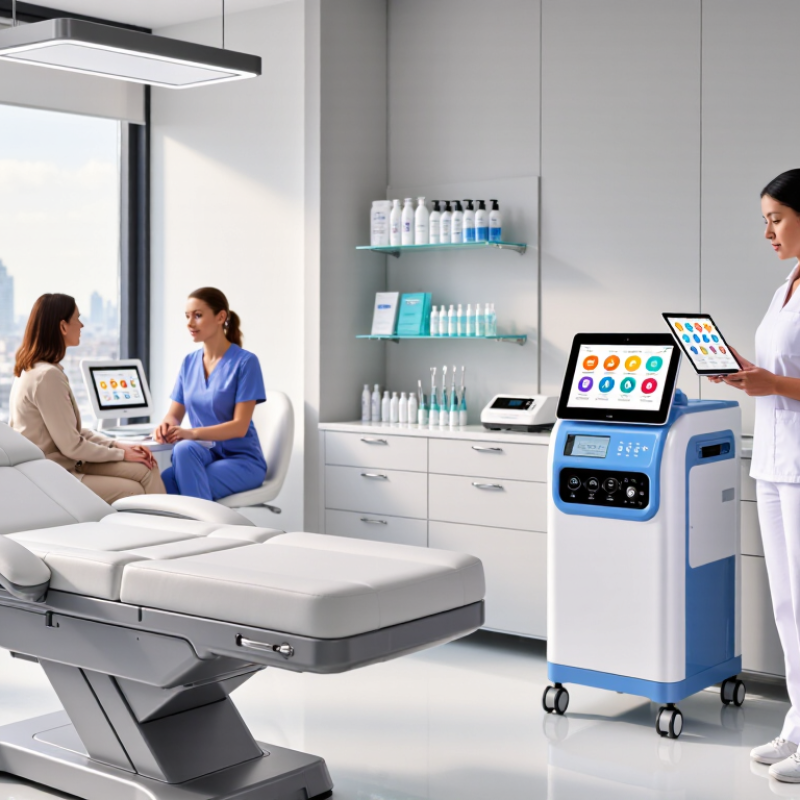
Defining your beauty equipment needs comes before comparing suppliers. In practice, a polished brochure can hide important gaps. Specify the treatment, target skin concerns, expected monthly workload, room size, operator skill, and maintenance capacity. ISAPS reported more than 18.7 million nonsurgical aesthetic procedures worldwide in 2023. That demand makes accurate capacity planning essential. A device for occasional facials should not be judged like equipment for a busy clinical setting.
Tip: Build a one-page requirement sheet. Include energy type, treatment time, consumables, training, warranty, servicing, and measurable outcomes. Ask whether the supplier can provide safety documentation, technical specifications, clinical evidence, and user training records. “Easy to use” is not a sufficient criterion. Your staff should test controls, handpieces, noise levels, and cleaning steps before purchase.
Tip: Score suppliers against defined criteria, not attractive promises. The Global Wellness Institute valued the global wellness economy at 6.3 trillion dollars in 2023, showing a large and competitive market. Yet market growth does not prove product quality. Request references from similar facilities and verify response times for repairs. I would also inspect spare-part availability, because downtime can damage revenue and client trust. My own checklist would include fewer features than expected; unnecessary functions can complicate training and raise maintenance costs.
Choosing a beauty equipment supplier starts with evidence, not polished promises. Ask for business registration, product certifications, quality-control procedures, and authorized testing documents. Check whether the documents match the supplier’s legal company name and current product models. A certificate alone proves little. Confirm its issuing organization and validity date.
Experience should appear in practical details. Ask how long the supplier has served salons, clinics, or training centers. Request installation records, maintenance schedules, and spare-part availability. Experienced suppliers explain operating limits clearly. They also discuss staff training, cleaning procedures, and expected equipment lifespan. Vague answers deserve caution. Ask for two or three recent customer references, then contact them directly. Listen for details about delivery accuracy, technical support, and response times.
Industry reputation is built through repeated behavior. Search independent reviews, trade directories, complaint records, and professional forums. Look for patterns rather than one angry comment. I once trusted a supplier after seeing impressive equipment photos, but I failed to verify after-sales support. The delayed repair cost valuable working days. That mistake changed my evaluation process. Now I request a written service agreement, warranty conditions, response timelines, and replacement procedures before ordering. A reliable supplier welcomes reasonable questions and provides traceable records. Still, no review system is perfect, so keep questioning your own assumptions.
Product quality should be checked beyond polished photos and impressive specifications. Request a working sample, user manual, test reports, and maintenance records. Examine the device for loose panels, uneven seams, unclear labels, or unstable controls. Run it through repeated sessions, not just a quick demonstration. Heat output, noise, cable strength, and emergency shutoff response matter in daily practice. Small faults often become expensive interruptions.
Safety evidence must match the equipment’s actual risks. Ask whether electrical safety, thermal protection, optical output, and electromagnetic compatibility have been tested. For applicable devices, review relevant ISO or IEC standards and confirm testing dates. A certificate alone is not enough. Check the issuing laboratory, model number, test scope, and production version. I have seen documents that looked convincing but covered an older model. That mistake is easy to miss.
Regulatory compliance also depends on the destination market and intended use. Suppliers should provide traceable serial numbers, risk assessments, labeling, warranty terms, and complaint procedures. Verify whether registration, importer details, or professional training is required locally. Ask how recalls and software updates are handled. Speak with current users when possible; their comments may reveal slow repairs or confusing instructions. No evaluation is perfect. A supplier with transparent gaps can be safer than one hiding them.
A low purchase price can hide expensive details. Ask for an itemized quotation covering unit cost, shipping, installation, training, taxes, and consumables. Compare the total operating cost over three years, not just the invoice. Request payment milestones tied to production, inspection, and delivery. This protects cash flow. I would also verify whether replacement parts have fixed prices. Some quotes look attractive until a handpiece or lamp needs replacement.
Customization should solve a documented treatment or workflow need. Ask for adjustable settings, compatible accessories, software language, electrical requirements, and skin-contact material details. Request drawings, a sample interface, or a demonstration before approving changes. Every modification should appear in a signed specification. Vague promises create disputes. A useful supplier explains technical limits instead of agreeing to everything. I still see buyers over-customize equipment, then struggle with training and maintenance. That is an avoidable mistake, but it is easy to make.
Read the warranty line by line. Confirm coverage period, labor, shipping, exclusions, response time, and access to trained technicians. Ask what happens if a fault appears during the first month. Get the answer in writing. Delivery terms deserve equal attention. Confirm production lead time, packaging, insurance, tracking, customs responsibilities, installation, and acceptance testing. Build a buffer for port delays and local inspections. A promised eight-week shipment may become ten. Set measurable milestones and document every inspection photographically. Reliable suppliers welcome these checks, even when they slow the process slightly.
Evaluating a beauty equipment supplier requires more than comparing prices. Technical support should be tested before purchase. Send a practical question about calibration, operating settings, or an error code. Measure the response time and check whether the reply includes clear steps, diagrams, or a qualified technician. Vague answers are warning signs. Ask for service hours, remote assistance methods, and spare-part availability. A reliable supplier should provide operating manuals, safety procedures, and maintenance schedules in readable language.
Training also deserves close attention. Request a live demonstration, not only a recorded presentation. Watch whether the trainer explains skin preparation, equipment limits, cleaning, and common user mistakes. Good training includes attendance records and a way to confirm competency. Maintenance plans should state inspection intervals, expected costs, and repair timelines. Customer feedback can reveal details that sales discussions hide. Look for repeated comments about response quality, downtime, and after-sales communication. Contact several previous customers directly, if possible. Ask how long repairs actually took. I once trusted polished testimonials too quickly, and they revealed little about difficult service cases. That was my mistake. Independent reviews can also be incomplete, so compare patterns instead of believing one dramatic complaint. Keep written records of every promise, including training dates, warranty conditions, and technical response commitments. Small omissions become expensive later.
| No. | Evaluation Dimension | What to Verify | Recommended Evidence | Practical Benchmark | Suggested Weight |
|---|---|---|---|---|---|
| 1 | Technical Support Availability | Check support channels, operating hours, escalation procedures, remote diagnostics, and the languages available to users. | Documented support policy, service contact list, escalation chart, and a trial support request. | At least two support channels; acknowledgement within 4 business hours for standard requests. | 12% |
| 2 | Training Quality | Assess whether training covers installation, treatment protocols, contraindications, cleaning, troubleshooting, and safe operation. | Training agenda, instructor qualifications, user manuals, competency checklist, and attendance records. | Initial operator training plus refresher training and an assessment before independent use. | 10% |
| 3 | Preventive Maintenance Program | Review inspection intervals, calibration requirements, consumable replacement schedules, and maintenance responsibilities. | Maintenance calendar, service checklist, calibration certificate requirements, and maintenance logs. | Written preventive-maintenance schedule with defined monthly, quarterly, or annual tasks. | 10% |
| 4 | Repair Response and Uptime | Evaluate diagnosis time, on-site service coverage, repair prioritization, loaner options, and downtime reporting. | Service-level agreement, repair records, response-time reports, and sample downtime calculations. | Clear priority levels; urgent cases acknowledged within 1 business day and downtime tracked. | 12% |
| 5 | Spare Parts and Consumables | Confirm availability of critical parts, consumables, compatible accessories, storage conditions, and ordering procedures. | Parts list, inventory policy, lead-time commitments, product shelf-life information, and replacement instructions. | Critical parts identified in advance; standard replacement items normally available within 5–10 business days. | 10% |
| 6 | Safety and Regulatory Documentation | Verify risk assessments, electrical safety information, intended-use statements, contraindications, and applicable market documentation. | Declaration of conformity where applicable, test reports, user instructions, safety notices, and complaint procedures. | Complete, current documentation supplied before purchase and updated when safety information changes. | 14% |
| 7 | Warranty and Service Terms | Compare warranty duration, covered components, exclusions, labor costs, shipping responsibility, and post-warranty options. | Signed warranty terms, service contract, exclusions list, and examples of approved warranty claims. | Written coverage for the equipment, defined claim process, and transparent exclusions with no vague promises. | 10% |
| 8 | Customer Feedback Quality | Look beyond star ratings and review the number of responses, recency, recurring complaints, support experience, and resolution history. | At least three verifiable customer references, dated reviews, case studies, and complaint-resolution examples. | Feedback should be recent, relevant to the same equipment category, and supported by independently verifiable references. | 10% |
| 9 | Software, Firmware, and Data Support | Assess update procedures, cybersecurity controls, data backup, user permissions, compatibility, and support after software changes. | Update policy, release notes, backup instructions, access-control documentation, and technical compatibility requirements. | Controlled updates, documented rollback or recovery procedures, and clear ownership of customer data. | 6% |
| 10 | Total Cost of Ownership | Calculate purchase price together with installation, training, maintenance, consumables, repairs, software fees, and disposal costs. | Five-year cost model, quotation with itemized fees, service-rate card, and expected consumable usage. | Use a multi-year cost comparison rather than evaluating the equipment by purchase price alone. | 6% |
Identify the treatment, skin concerns, monthly workload, room size, operator skills, and maintenance capacity.
Match the device to actual usage, not impressive features.
Request business registration, product certifications, technical specifications, safety documents, and test reports.
Ask for installation records, maintenance schedules, spare-part information, and recent customer references.
Examine loose panels, uneven seams, unclear labels, unstable controls, cables, and emergency shutoff response.
Ask about electrical safety, thermal protection, optical output, and electromagnetic compatibility testing.
Verify local registration, importer details, labeling, professional training, and intended-use requirements.
Request written warranty terms, service agreements, repair timelines, and replacement procedures.
Choosing the right supplier is essential for investing in reliable, safe, and effective beauty equipment. This guide explains how to evaluate beauty equipment suppliers by first defining your business needs, treatment goals, budget, and essential performance criteria. It also recommends checking a supplier’s credentials, industry experience, reputation, product documentation, safety testing, and compliance with applicable regulations. Comparing equipment quality, pricing, customization options, warranty coverage, payment conditions, and delivery schedules can help you identify the best overall value rather than focusing only on the lowest price.
A dependable supplier should also provide responsive technical support, clear user training, maintenance guidance, and accessible replacement parts when needed. Before making a decision, review customer feedback carefully and ask for practical details about installation, after-sales service, and issue resolution. By assessing these factors systematically, buyers can reduce risks, select equipment that fits their operations, and build a long-term relationship with a professional and trustworthy supplier.