Choosing the right Chinese facial machine manufacturer is more than comparing prices, product photos, or factory size. It requires practical verification. The best partner should combine stable engineering, transparent documentation, responsive communication, and reliable after-sales support. A polished showroom can still hide weak quality control.
Dr. Joe Niamtu III, a respected facial aesthetics expert, offers a useful principle: “Choose technology that supports sound clinical judgment, not technology that replaces it.” This idea also applies to manufacturers. A trustworthy supplier should explain how each device works, identify suitable treatment applications, and provide clear operating guidance. Do not accept vague claims about permanent results, painless procedures, or instant transformation. Ask for test reports, electrical safety documents, production details, and references from established buyers.
Learning how to choose a facial machine manufacturer also means examining the factory beyond its website. Request a live video tour or an on-site inspection. Look for labeled components, organized assembly areas, calibration records, and trained technicians. Ask how the company handles defective handpieces, software updates, replacement parts, and warranty claims. Small details matter. A loose cable today may become an expensive service problem later.
There is no perfect supplier. Some excellent factories may have limited international marketing experience. Others may communicate well but outsource critical components. That is where careful questioning becomes essential. Compare samples, not promises. Review contracts slowly. Confirm responsibilities in writing. The cheapest quotation may save money initially, yet create training, compliance, and maintenance costs later. A dependable manufacturer should help your clinic protect patients, staff, reputation, and long-term investment.
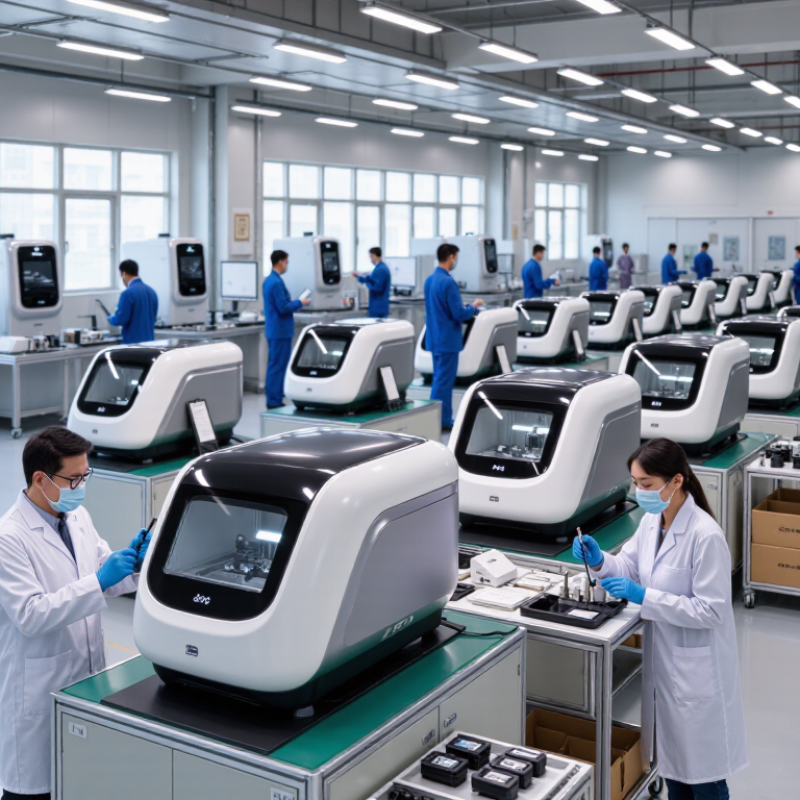
Choosing the best China facial machine manufacturer starts with a precise product definition. Describe the intended treatment, skin types, operating frequency, energy range, wavelength, cooling method, and treatment area. Do not accept “multifunctional” as a specification. Request measured output data, calibration records, electrical safety testing, and service-life estimates. For devices with medical or aesthetic applications, review ISO 13485 quality procedures and ISO 14971 risk-management documentation. IEC 60601-1 may also apply to electrical safety. Requirements differ by market, so confirm them before production.
Industry data can guide your standards. Fortune Business Insights valued the global medical aesthetics market at USD 18.82 billion in 2023, showing strong demand but also intense competition. This growth makes reliability more important than attractive casing. Ask for batch traceability, component origin, software update controls, and clear warranty terms. A factory audit should include assembly records and final inspection samples. One weak point remains: documents can look complete while daily usability feels poor. Test the handpiece weight, screen response, cable flexibility, and cleaning process with real operators.
Tips: Build a comparison sheet before contacting suppliers. Set pass-or-fail limits for output stability, noise, temperature, and downtime. Request independent test reports, not only factory declarations. Check whether replacement parts remain available for at least three years. Run a small pilot order first. It may cost more initially. That cost can expose design problems before mass production.
How to Choose the Best China Facial Machine Manufacturer?
Verify the manufacturer’s qualifications, experience, and factory capacity before discussing price. The ISO Survey 2023 recorded about 1.27 million ISO 9001 certificates worldwide. Certification alone proves little. Check the certificate scope, issuing body, expiry date, and factory address. For electrical facial equipment, request relevant safety test reports and documented quality procedures. A capable manufacturer should explain incoming inspection, assembly checks, final testing, and complaint handling without hesitation.
Experience should be measurable. Ask for production records, export history, user feedback, and failure-rate data from comparable facial machines. Grand View Research estimates the global medical aesthetics market will expand strongly through 2030, with technology demand driving supplier competition. More suppliers do not always mean better engineering. Request anonymized batch records, serial-number traceability, and photographs of actual production stages. Speak with technical staff, not only sales representatives.
Factory capacity needs physical evidence. Look for separate assembly, aging-test, calibration, and packaging areas. Count trained operators and verify key equipment, including electrical safety testers and temperature-control tools. Ask for monthly capacity under normal staffing, not an ideal shift. A factory may claim 5,000 units monthly, yet deliver only 1,500 consistently. That difference matters. One weakness in this assessment is reliance on documents; certificates can be current while daily execution is uneven. An independent factory audit remains worthwhile. Check samples from different batches, because one excellent unit can hide unstable manufacturing.
How to Choose the Best China Facial Machine Manufacturer?
Technology should be judged beyond a polished catalog. Ask for output ranges, calibration records, and software change histories. Test the same device repeatedly, not just once. Check probe seams, cable strain relief, cooling vents, and skin-contact materials. These details often reveal production discipline. A manufacturer should explain whether its equipment is cosmetic or medical under your target market’s rules. Claims affect compliance requirements.
Safety certification needs careful verification. Request the certificate number, issuing body, scope, factory address, and expiry date. ISO 13485 supports medical-device quality management, but it does not prove every device is safe. IEC 60601-1 testing may matter for electrically powered medical equipment. Requirements vary by market. The ISO Survey 2023 recorded 1,265,216 valid ISO 9001 certificates worldwide, showing how common quality certification has become. A certificate alone is not enough.
Product quality needs evidence from production, not promises. Request batch records, incoming-material checks, final inspection data, and independent laboratory reports. For LED, radio-frequency, or ultrasonic devices, ask for measurements across multiple units. Check heat, energy stability, electrical leakage, and treatment-time accuracy. Visit the factory if possible. Speak with quality staff, not only sales staff. A flawless sample can hide inconsistent batches. I would treat missing traceability as a failed checkpoint, even when the machine looks impressive. That judgment can feel strict, but patient safety deserves it.
A practical, evidence-based evaluation framework for comparing anonymous manufacturers and facial-aesthetic equipment suppliers.
| Evaluation Dimension | What to Evaluate | Reliable Reference or Benchmark | Evidence to Request | Suggested Weight |
|---|---|---|---|---|
| Technology Maturity | Treatment principle, energy-control method, operating modes, treatment parameters, and software stability. | Parameters should be clearly defined, adjustable within safe limits, and supported by a documented risk-control process. | Technical specification, user manual, software screenshots, product demonstration, and design-verification records. | 20% |
| Applicable Safety Standards | Electrical safety, electromagnetic compatibility, usability, optical safety, and risk-management practices relevant to the device. | Commonly relevant standards may include IEC 60601-1, IEC 60601-1-2, IEC 62366-1, IEC 62471, and ISO 14971, depending on device type and intended use. | Complete test reports issued by recognized laboratories, declaration of conformity, risk-management file summary, and standard editions used. | 20% |
| Quality Management System | Manufacturing controls, supplier management, traceability, corrective actions, inspection procedures, and change control. | ISO 13485 is the principal medical-device quality-management standard; certification scope should cover the relevant product and manufacturing activities. | Valid certificate, certification scope, certificate issuer, audit status, production-flow documents, and sample inspection records. | 15% |
| Regulatory Readiness | Ability to support the intended market, product classification, technical documentation, labeling, and post-market obligations. | Requirements differ by jurisdiction. EU-market products may fall under Regulation (EU) 2017/745, while U.S. requirements depend on classification and intended use. | Regulatory pathway, classification rationale, technical-file index, labeling samples, clinical or performance evidence, and registration responsibilities. | 15% |
| Product Quality and Reliability | Component consistency, assembly quality, thermal management, connector durability, enclosure quality, and long-term performance. | The supplier should provide defined acceptance criteria, incoming and final inspection procedures, and repeatable production records. | Pre-shipment inspection plan, burn-in or functional-test records, serial-number traceability, sample units, and failure-rate data where available. | 12% |
| Clinical and Performance Support | Evidence supporting intended cosmetic or medical claims, treatment consistency, contraindications, and user instructions. | Evidence should match the exact model, treatment parameters, intended population, and claims being made; marketing images alone are not sufficient. | Performance test reports, clinical evaluation or literature review, treatment protocols, adverse-event information, and claim-substantiation documents. | 8% |
| Customization and Engineering Capability | Ability to modify housing, user interface, language, accessories, treatment presets, packaging, and electrical configuration without weakening compliance. | Changes should be controlled through documented design-change, verification, validation, and regulatory-impact procedures. | Engineering team profile, change-control procedure, prototype records, validation plan, and examples of completed non-confidential projects. | 5% |
| After-Sales Service | Warranty terms, spare-parts availability, remote troubleshooting, repair turnaround, training, and complaint handling. | Service commitments should be written, measurable, and supported by an identifiable technical-support process. | Warranty policy, service-level agreement, spare-parts list, troubleshooting guide, training materials, and escalation contacts. | 5% |
| Recommended Decision Method | 100% | |||
| Score each category from 1 to 5, multiply the score by the suggested weight, and verify all certificates and test reports independently. A high weighted score should not compensate for missing mandatory safety or regulatory evidence. | ||||
How to Choose the Best China Facial Machine Manufacturer?
Price should be compared by total delivered cost, not factory quotation alone. Include tooling, sample fees, shipping, training, spare parts, and warranty support. Fortune Business Insights valued the global aesthetic devices market at about USD 15.31 billion in 2023. Its 2024 report also projects strong growth through 2032. This growth attracts new suppliers, but low prices can hide weaker components or limited testing. Ask for a line-by-line quotation. Ask twice. A facial machine priced 15% lower may become more expensive after repeated repairs.
Customization needs clear boundaries. Many manufacturers offer logo printing, housing colors, software language, electrode shapes, and packaging changes. Deeper changes, such as circuit design or energy output, usually require engineering fees and longer development cycles. The International Organization for Standardization emphasizes documented quality processes through ISO 13485 for medical-device manufacturing. Certification alone is not enough. Review current certificates, test reports, calibration records, and production samples. I would request one customized sample before approving a large order. It feels slower, but my imagined shortcut would be difficult to defend.
Minimum order quantities vary by customization level. Stock models may start near 10 to 50 units, while private-label orders often require 100 units or more. These figures are market practices, not universal rules. Negotiate a smaller pilot order with written quality standards. Confirm replacement policies, inspection rights, delivery dates, and payment milestones. A reliable supplier should explain what happens when specifications are missed. Vague promises are costly.
How to Choose the Best China Facial Machine Manufacturer?
Assess After-Sales Support, Warranty Terms, and Long-Term Reliability
A polished demonstration proves little. After-sales support often reveals a manufacturer’s real professionalism. Ask how quickly technicians answer urgent questions and whether support is available in your working language. Request a written service process, not a friendly promise. It should explain remote diagnosis, replacement procedures, and expected response times. A practical supplier may provide video training, operating guides, and troubleshooting charts for common errors.
Study the warranty carefully. Check its duration, coverage, and exclusions. Does it include the control screen, handpiece, power supply, and internal components? Confirm who pays shipping when a covered part fails. Ask whether improper cleaning, unstable voltage, or normal wear voids the agreement. These details matter. A reliable manufacturer should offer serial-number tracking and clear repair records. Request sample warranty documents before placing an order.
Long-term reliability requires evidence. Ask for service data from machines used for several years, not only recent installations. You can also request references from clinics with similar treatment volumes. Inspect the availability of replacement cables, filters, probes, and other wear parts. Delayed parts can stop a busy treatment room. I once focused too much on purchase price and overlooked training quality. That decision created avoidable downtime. My view changed after comparing response logs, repair times, and spare-part availability. The cheapest machine is rarely the lowest-cost choice over five years. Still, no supplier is perfect, so leave room for honest questions and documented improvements.
Recommended due-diligence weighting for after-sales support, warranty terms, and long-term reliability
Use these percentages as a practical purchasing framework rather than relying on product price alone. Give the greatest attention to service responsiveness, warranty coverage, spare-parts availability, repair capability, and documented quality control. Confirm every item in the quotation, warranty agreement, and service-level terms before placing an order.
Check the certificate scope, issuing body, expiry date, and factory address. Request safety reports and written quality procedures. A certificate alone proves little.
Ask for batch records, export history, failure-rate data, and serial-number traceability. Request photographs from actual production stages. Speak with technical staff, not only sales representatives.
Look for assembly, aging-test, calibration, and packaging areas. Count trained operators and inspect electrical safety testers. Ask for normal monthly capacity, not ideal-shift capacity. Promises can be optimistic.
Inspect probe seams, cable strain relief, cooling vents, and skin-contact materials. Test several units repeatedly. One excellent sample may hide unstable batches.
Request relevant quality certificates, electrical safety reports, calibration records, and laboratory test results. Confirm each document’s scope and factory address. Quality certification does not prove every device is safe.
Compare total delivered cost, including samples, tooling, shipping, training, spare parts, and warranty support. Request a line-by-line quotation. A cheaper machine may create higher repair costs.
Confirm housing colors, packaging, software language, logo placement, and electrode shapes. Circuit changes and output changes usually require engineering fees. Approve one customized sample before a large order.
Stock models may require fewer units than private-label products. Request a smaller pilot order with written quality standards. Confirm replacement policies, inspection rights, delivery dates, and payment milestones. This feels slower, but it may prevent expensive mistakes.
Choosing the right supplier begins with understanding how to choose a facial machine manufacturer that can meet your specific business and treatment needs. Define the machine functions, target users, design preferences, performance standards, and required compliance documents before contacting suppliers. Then review each manufacturer’s qualifications, industry experience, production capabilities, quality control procedures, and factory capacity. A reliable manufacturer should provide clear technical information, stable production processes, safety certifications, and consistent product testing.
Cost is important, but it should be evaluated alongside customization options, minimum order quantities, lead times, and overall product value. Ask about branding, packaging, software or hardware adjustments, and sample policies to confirm whether the supplier can support your development plans. Finally, assess after-sales service, warranty coverage, spare parts availability, training, and response times. Transparent communication and dependable long-term support can reduce operational risks and help establish a stable partnership as your business grows.