A professional facial machine is more than a polished console and a collection of attachments. In a busy treatment room, its settings, controls, and maintenance needs affect how consistently an esthetician can work. So, what features should a professional facial machine have? The answer starts with practical essentials: adjustable output, clear controls, dependable safety features, and attachments suited to the treatments offered. A magnifying lamp should provide even light. A steamer should direct a steady flow, not spit droplets across the client’s towel. Small details matter.
Dermatologist Dr. Howard Murad has said, “The skin is a reflection of our overall health.” That perspective is a useful reminder: equipment should support careful, client-centered skincare, not promise perfect results. A machine should also be easy to clean between appointments, with accessible parts and straightforward maintenance guidance. Training matters, too. Even a well-designed device can be used poorly if its operator does not understand its settings or limits. And yes, a feature list can look impressive while hiding awkward controls or costly upkeep. I would not judge a machine by its display alone. This guide explores the features that help professional facial machines fit real treatment rooms, support consistent routines, and make informed purchasing decisions easier.
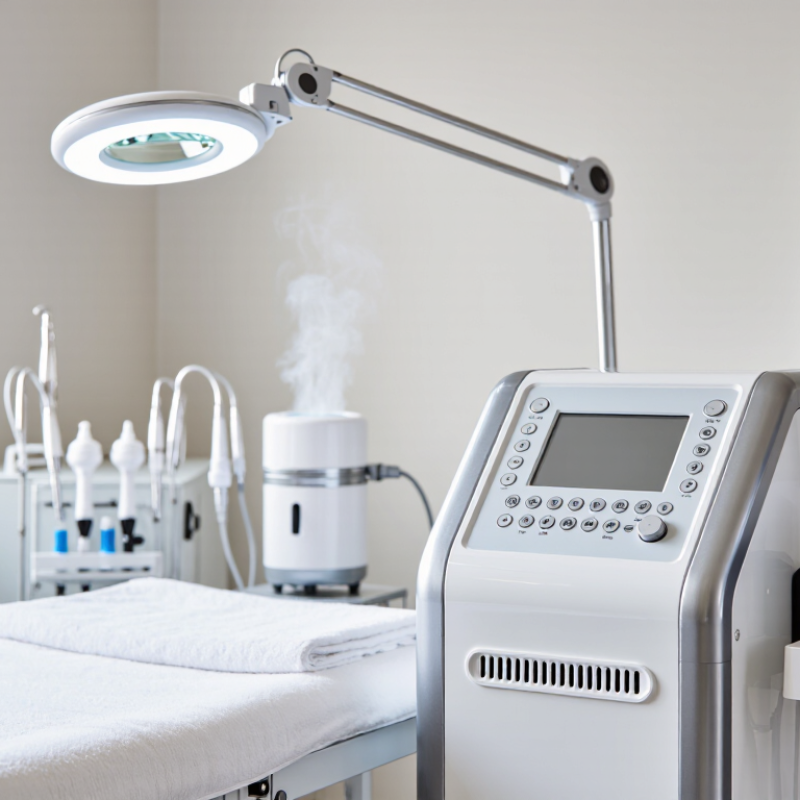
A professional facial machine is defined by controlled performance, clear operating instructions, and suitability for its intended treatment—not by a polished screen or a long list of modes.
The International Society of Aesthetic Plastic Surgery’s 2023 Global Survey estimated 19.1 million nonsurgical aesthetic procedures worldwide. That figure covers multiple procedure types, not facial-machine use, but it shows why sound training and equipment standards matter.
Look for adjustable settings, visible treatment indicators, and instructions that explain when to stop. A trained operator should be able to check the client’s skin, select appropriate settings, and record the treatment.
Cleanable contact surfaces matter, too. So do maintenance records and a clear process for reporting faults. These details are less exciting than a new feature. They are often more useful.
Professional use also depends on the operator, room, and treatment protocol. A device alone cannot ensure consistent results. Ask for technical documentation, staff training materials, and service guidance before purchase.
A small weakness: specifications do not always tell you how easily a device works during a busy day. Test the controls with gloves on, check whether the handpiece feels balanced, and notice if key settings are hard to read.
One point deserves reflection: more functions can mean more complexity, not better care.
Core technologies matter because skin treatments rely on controlled energy, consistent contact, and careful adjustment. Radiofrequency warms deeper tissue, while light-based systems target selected skin concerns. Their results depend on wavelength, energy level, pulse duration, and the person’s skin.
Precision matters. Adjustable settings let trained professionals adapt treatment rather than use one intensity for every face. Cooling and temperature monitoring can improve comfort and help limit excessive heat, but they cannot remove risk.
ISAPS reported 19.1 million nonsurgical aesthetic procedures worldwide in its 2023 Global Survey. That figure signals broad demand, not proof that any device works better.
For practical treatment, useful machines offer clear controls, stable output, and documented operating guidance. A practitioner should be able to see the selected settings, assess the skin, and pause if irritation develops. Imaging or skin-analysis tools may help track visible changes, though lighting and hydration can affect readings.
Small details matter: a handpiece that maintains even contact across the cheek is more useful than a complicated screen with unclear settings. Not magic. Professional judgment still matters, and published procedure totals do not establish clinical effectiveness.
Device makers and clinics should evaluate evidence for each technology and treatment goal; even careful protocols leave room for uncertainty.
Adjustable settings matter because “skin type” is not a treatment instruction. Oily, dry, combination, and reactive skin can respond differently to heat, suction, and light intensity. Even the same person may react differently after sun exposure or a change in skincare routine. A fixed-output machine leaves little room to adapt.
A systematic review of international sensitive-skin studies reported that roughly 60–70% of women and 50–60% of men described their skin as sensitive. These figures are self-reported, not clinical diagnoses, but they show why one setting cannot suit everyone. Fitzpatrick skin type can help describe how skin responds to ultraviolet exposure; it does not, by itself, predict tolerance to every facial treatment. Small adjustments matter.
For a professional facial, adjustable intensity, treatment time, and temperature allow practitioners to begin gently and observe the skin. Look for lingering redness, discomfort, or unusual warmth. Then reduce output or pause. Keep clear records. A dial is not a diagnosis, and settings should follow device instructions and appropriate training. I would not assume that “low” always means safe; the person’s current skin condition matters, too. The machine should support careful judgment, not replace it.
A facial device should make risk visible and controllable. A thermal cutoff can stop a handpiece from overheating; an emergency switch lets a practitioner halt treatment without searching through menus. Insulated handles, stable cables, and clear intensity displays matter during close work around the eyes and cheeks. Small details count. A loose connector or unreadable setting can turn a routine treatment into a preventable hazard.
The U.S. Bureau of Labor Statistics recorded 2.6 million nonfatal workplace injuries and illnesses in private industry in 2023. That figure covers many occupations, not facial-care settings alone, but it shows why equipment safeguards and staff training deserve attention. Reliable machines should include documented electrical testing, maintenance guidance, and clear warnings for heat or contact risks. For client protection, detachable treatment heads should be easy to clean, and instructions should specify appropriate disinfection between users. CDC guidance emphasizes cleaning reusable devices before disinfection, because residue can undermine the process. A checklist helps. But a checklist can become theater if nobody checks the actual handpiece, cable, or temperature setting. Good safety practice means pausing when a reading looks unusual, even when the appointment schedule is tight.
Safety controls help reduce treatment risks for both clients and practitioners.
Bars show the number of example control types listed for each risk—not measured effectiveness or a safety rating. Examples include temperature limits, cooling controls, and overheat shutdown for thermal injury; electrical insulation, protective earthing, and leakage-current protection for electrical shock; wavelength-appropriate eyewear and emission interlocks for light exposure; and cleanable surfaces and replaceable tips for infection control. Appropriate safeguards depend on the device modality and applicable regulations.
A professional facial machine may run through several appointments each day, so small failures can quickly disrupt schedules. Durable housing, secure connectors, and well-sealed controls help equipment withstand repeated handling, warm treatment rooms, and routine cleaning. Cable strain relief matters too; loose connections can turn a smooth session into an avoidable pause. Look for replaceable parts and clear service instructions, not just a heavy outer shell. Weight alone proves little.
Ease of maintenance also affects hygiene and operating costs. Smooth surfaces are easier to wipe and inspect between clients. Removable components should come with clear instructions on compatible cleaning products and drying time. Staff should be able to check vents, cables, and handpieces without dismantling the unit. That saves time. In practice, the easiest machine to maintain is not always the one with the fewest parts; inaccessible components can make minor faults frustrating. Even dependable equipment needs regular care, and a simple service log can help staff notice recurring issues. Skipping a check may seem harmless, until a blocked vent or worn cable interrupts a busy day.
Controlled performance, clear instructions, and suitability for its intended treatment matter most. A polished screen alone proves little.
Choose adjustable settings, visible indicators, and clear stop instructions. The operator should be able to read controls easily, even with gloves on.
Training helps staff assess skin and select appropriate settings. Records can document each treatment and help identify problems. Useful, though easy to neglect.
Radiofrequency warms deeper tissue, while light-based systems target selected concerns. Results depend on settings and individual skin.
No. They may improve comfort and help limit excessive heat, but risks remain.
Check the emergency switch, cables, connectors, and intensity display. A loose cable matters. Pause if a reading looks unusual.
Clean them before disinfection, following the device instructions. Residue can undermine disinfection, so a rushed wipe may not be enough.
Not necessarily. Extra modes can add complexity, and a balanced handpiece may be more useful than a crowded screen. Test the controls during a realistic workday.
A professional facial machine is defined by more than its appearance or number of functions. It should combine dependable construction with technologies designed to support common skincare treatments, such as cleansing, exfoliation, hydration, or facial massage. When considering what features should a professional facial machine have, look for clear controls, consistent performance, and treatment options that can be adjusted to suit different service needs.
Adjustable intensity and timing help practitioners tailor sessions to different skin types and comfort levels. Built-in safety features, including secure attachments, clear operating instructions, and suitable temperature or intensity controls, can help protect both clients and practitioners. Durability and ease of maintenance matter too: sturdy components, accessible cleaning surfaces, and straightforward upkeep help keep the equipment reliable over time. Together, these qualities make a machine more practical for daily use and support a comfortable, well-managed treatment experience.