Premium Aesthetic Technology Portfolio
Global Industrial Landscape of Laser Hair Removal Technology
The global aesthetic market is undergoing a structural transition. Laser hair removal, once regarded as a premium spa treatment, has evolved into a fundamental personal care standard. Driven by demographic shifts, expanding middle-class disposable income, and a rising emphasis on non-invasive dermatological procedures, the demand for medical-grade laser systems has experienced exponential growth. B2B distributors, clinical chains, and private labels are actively seeking manufacturing partners capable of delivering both technical innovation and strict regulatory compliance.
According to current market intelligence, the medical laser hair removal system market is projected to expand at a compound annual growth rate (CAGR) of over 15% through 2030. This growth is heavily concentrated in high-capacity diode systems (primarily 808nm, 755nm, and 1064nm wavelengths). The transition from traditional Intense Pulsed Light (IPL) to highly targeted Diode Lasers highlights a significant industry shift towards higher efficacy, patient comfort, and speed of treatment.
Current Industry Trends Shaping the B2B Market
Modern B2B buyers no longer focus solely on the base unit cost of machinery. Instead, the competitive battlefield is defined by clinical speed, thermal safety profiles, lifetime shots of the laser emitter, and software integration capabilities. The market is defined by several notable trends:
- Multi-Wavelength Integration: Modern systems combine Alexandrite (755nm) for lighter skin types, standard Diode (808nm) for speed, and Nd:YAG (1064nm) for darker Fitzpatrick skin scales into a single handpiece.
- Active Cooling Systems: Advancements in thermoelectric cooling (TEC) and contact sapphire windows ensure epidermal protection and practically painless treatment experiences.
- IoT-Enabled Clinics: Smart control panels that track usage metrics, shot counts, and machine vitals remotely, allowing clinic franchises to monitor operations in real-time.
Technology Roadmap & Technical Architecture
Developing a high-performance laser system requires careful engineering. To help you understand the core mechanics, we outline the primary technical components that power modern aesthetic hardware below:
Diode Laser Emitter
Utilizing high-power, gold-tin bonded vertical diode stacks (sourced from leading suppliers like Coherent or Jenoptik) to ensure an ultra-long lifetime of up to 40-100 million shots with minimal energy decay.
Dual-Engine Cooling
A combination of active compressor cooling, large-capacity copper radiators, and TEC cooling blocks ensures the water temperature remains between 20°C and 25°C, enabling 24-hour continuous clinic operation.
UI & Software Control
Powered by Android-based operating systems with interactive touch interfaces, skin tone detection protocols, and smart pre-sets tailored to different Fitzpatrick skin categories and treatment areas.
Future Technological Evolutions (2025–2030)
The roadmap for aesthetic laser development is shifting toward automation and data-driven treatments. High-precision laser heads are being coupled with real-time diagnostic cameras that analyze the melanin index of the skin before every pulse. By programmatically adapting the pulse duration (ms) and energy density (J/cm²) on the fly, these advanced setups eliminate human error, maximize patient comfort, and significantly reduce the likelihood of epidermal side effects.
End-to-End OEM/ODM Customization Solutions
As a leading aesthetic equipment manufacturer, we support our partners from initial conceptualization to manufacturing, branding, and regulatory compliance. Our structured workflow ensures reliability at every stage of the process:
Product Specification
Defining the laser wavelengths, output power ratings, spot sizes, and mechanical chassis requirements tailored to your specific market demands.
Industrial Design & UI
Developing bespoke exterior chassis designs and custom-branded graphical user interfaces (GUI) to align with your corporate identity.
Prototyping & Testing
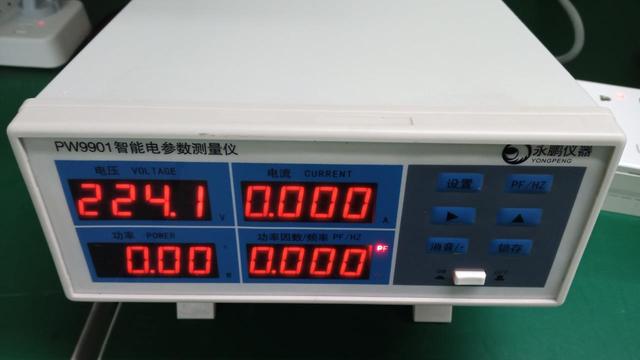
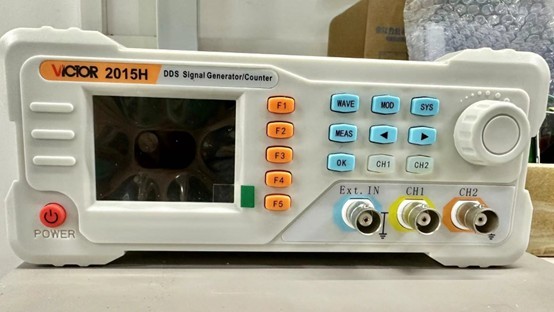
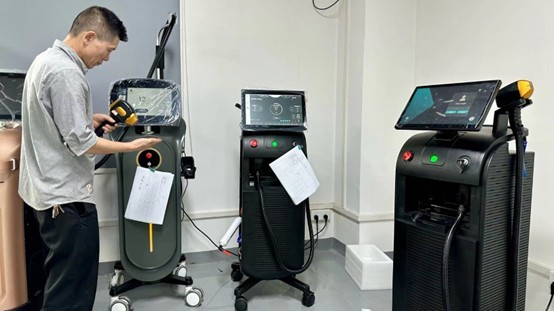
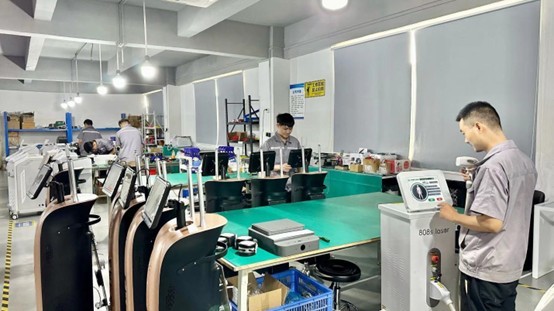
Constructing functional prototypes to undergo strict electrical, safety, and optical validation in our testing laboratories.
Mass Production & QC
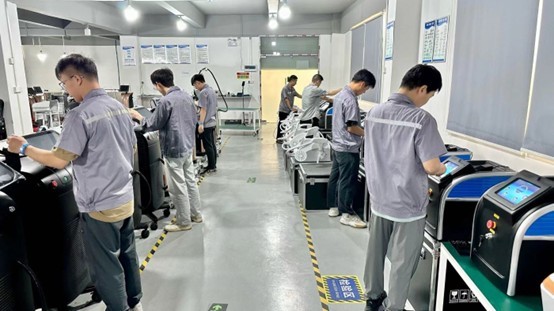
Scalable assembly in our standardized facilities under strict ISO guidelines, with thorough quality control protocols for every unit.
Manufacturing Excellence & Global Presence
Hangzhou FMED Beauty Co., Ltd.
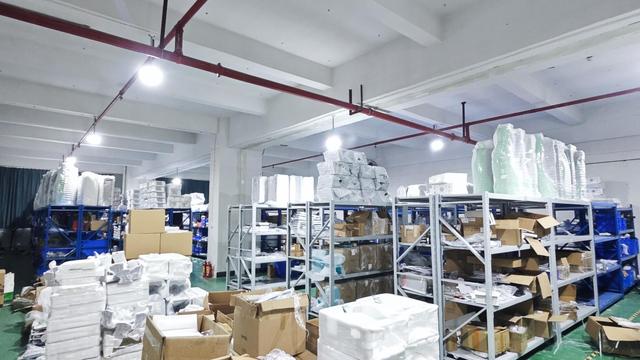
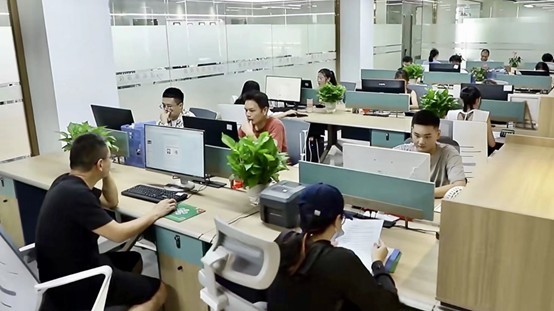
Founded in 2011, Hangzhou FMED Beauty Co., Ltd. is a professional manufacturer specializing in facial machines, beauty equipment, and aesthetic device solutions for the global beauty and personal care industry. Headquartered in Hangzhou, China, the company operates a modern manufacturing facility covering approximately 15,000 square meters and employs more than 300 professionals across research and development, engineering, production, quality management, and international sales departments.
FMED Beauty focuses on the design, development, and production of professional beauty equipment, facial treatment devices, skincare technology systems, aesthetic machines, salon equipment, spa solutions, and customized beauty technology products. The company serves beauty brands, distributors, aesthetic clinics, salons, wellness centers, and equipment importers in international markets.
Supported by an experienced R&D team and advanced manufacturing capabilities, FMED Beauty integrates electronic engineering, industrial design, software development, and product testing into its production process. The company continuously invests in technological innovation to improve device performance, user experience, operational efficiency, and product reliability.
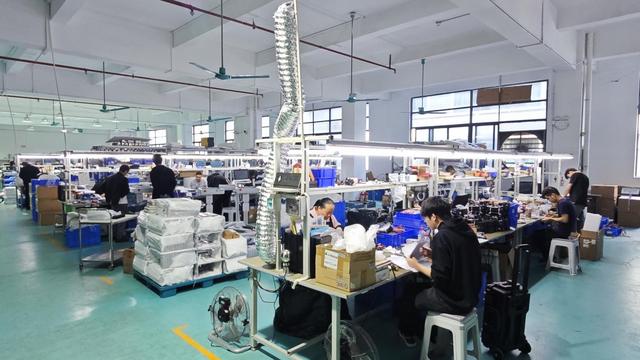
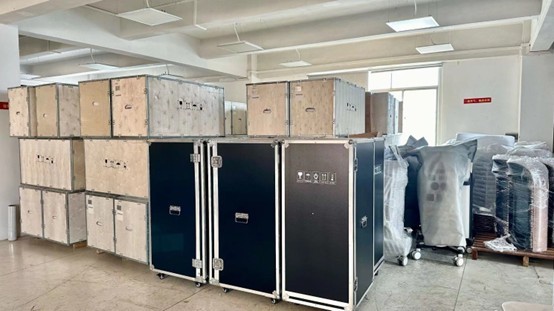
The factory is equipped with modern assembly lines, testing laboratories, quality inspection facilities, and standardized production management systems. Strict quality control procedures are implemented throughout component sourcing, assembly, calibration, testing, packaging, and final inspection to help ensure product consistency and manufacturing standards.
FMED Beauty provides comprehensive OEM and ODM services, including product customization, industrial design support, branding solutions, packaging development, and private-label manufacturing. Flexible production capabilities allow the company to support both emerging brands and established international businesses.
Today, Hangzhou FMED Beauty Co., Ltd. exports its products to Europe, North America, the Middle East, Southeast Asia, Australia, and other global markets. Through continuous innovation, manufacturing excellence, and customer-focused service, the company remains committed to delivering professional beauty equipment and aesthetic device solutions that support the evolving needs of the worldwide beauty industry.
Localized Application Scenarios & Regulatory Compliance
Navigating global regulatory landscapes requires understanding the compliance requirements of different target jurisdictions. Medical devices face distinct classification guidelines depending on the region:
United States (FDA Framework): High-power aesthetic lasers fall under Class II medical devices, requiring 510(k) clearance. Demonstrating substantial equivalence to a legally marketed predicate device is essential before commercial import.
European Union (MDR 2017/745): The Medical Device Regulation classifies aesthetic lasers under Annex XVI, subjecting non-medical aesthetic devices to the same stringent safety and QA protocols as therapeutic medical hardware.
Clinical Environment Integration: Medical spas and clinical chains customize device configurations based on their primary patient demographics. For instance, clinics in Latin America or Southeast Asia often request enhanced 1064nm Nd:YAG configuration options to safely and effectively treat darker Fitzpatrick skin types (Types IV-VI), minimizing risks of post-inflammatory hyperpigmentation (PIH).
Industrial FAQ & Procurement Insights
Complete Aesthetic & Manufacturing Equipment Portfolio